
In its most traditional version, it comes close to wood parquet in appearance. Some characteristics make it preferable to wood: for instance it has greater wear resistance, better durability over time, it is easier to clean and sanitise, and it does not change colour when exposed to sunlight.

Why choose laminate parquet?
Recently, the use of laminate has grown enormously, for good reason. Nowadays it is not only beautiful, almost more so than wood parquet, but it is ultra-resistant.
Obtained by hot-pressing different materials together, it is the right solution for many rooms, including busy ones.
Unlike wood parquet, laminate parquet is easy to install. The installation often requires little equipment and fairly basic skills: practically it is the ideal product for “DIY”.
Because of its “layered” nature, laminate parquet is not the ideal floor for kitchens or bathrooms.
Laminate has many advantageous characteristics. Its resistance to impacts, scratches, leaks, steam and humidity makes it increasingly common. In furnishing it is widely used for:
- worktops and doors in the kitchen
- furniture in the bathroom
- floors
Laminate parquet: pros and cons
What are the advantages of laminate?
Here is a short list:
- decent durability over time
- good impact resistance
- notable scratch resistance
- decent moisture resistance
- good steam resistance
- decent resistance to leaks
- good stain resistance
- easy to sanitise
- excellent antistatic performance
- pleasant appearance
- great resistance to stress
- good quality\price ratio
- easy to clean and maintain
- gets dirty little
- excellent quality\price ratio
On the other hand:
- low resistance to heat sources in direct contact with the surface
- it is an artificial material subject to large quality variations
Below is a partial list of our laminate flooring range. If you would like a specialist consultation with no obligation, contact us.
-
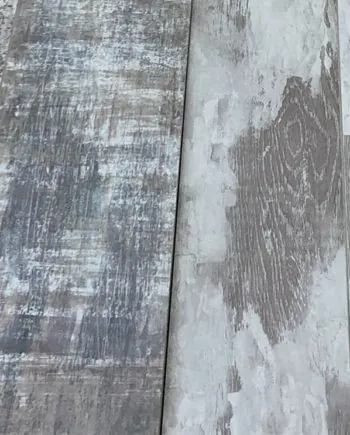
Laminate Type A and B
-
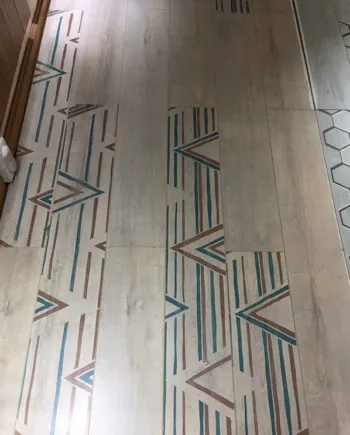
Laminate – various kinds
Price range: 36,00€ through 44,00€ Select options This product has multiple variants. The options may be chosen on the product page -
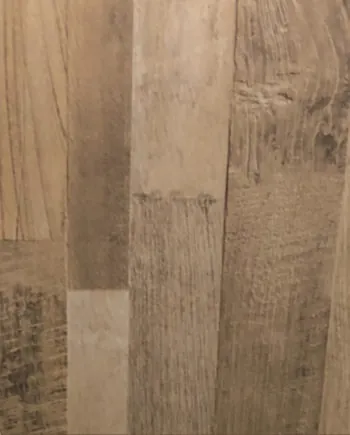
3 Strips Laminate
-
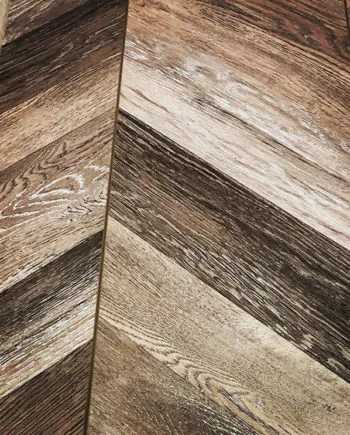
Herringbone Laminate


